
Rest is Politics again & Joe’s ‘The Conversation that Changed Everything.’
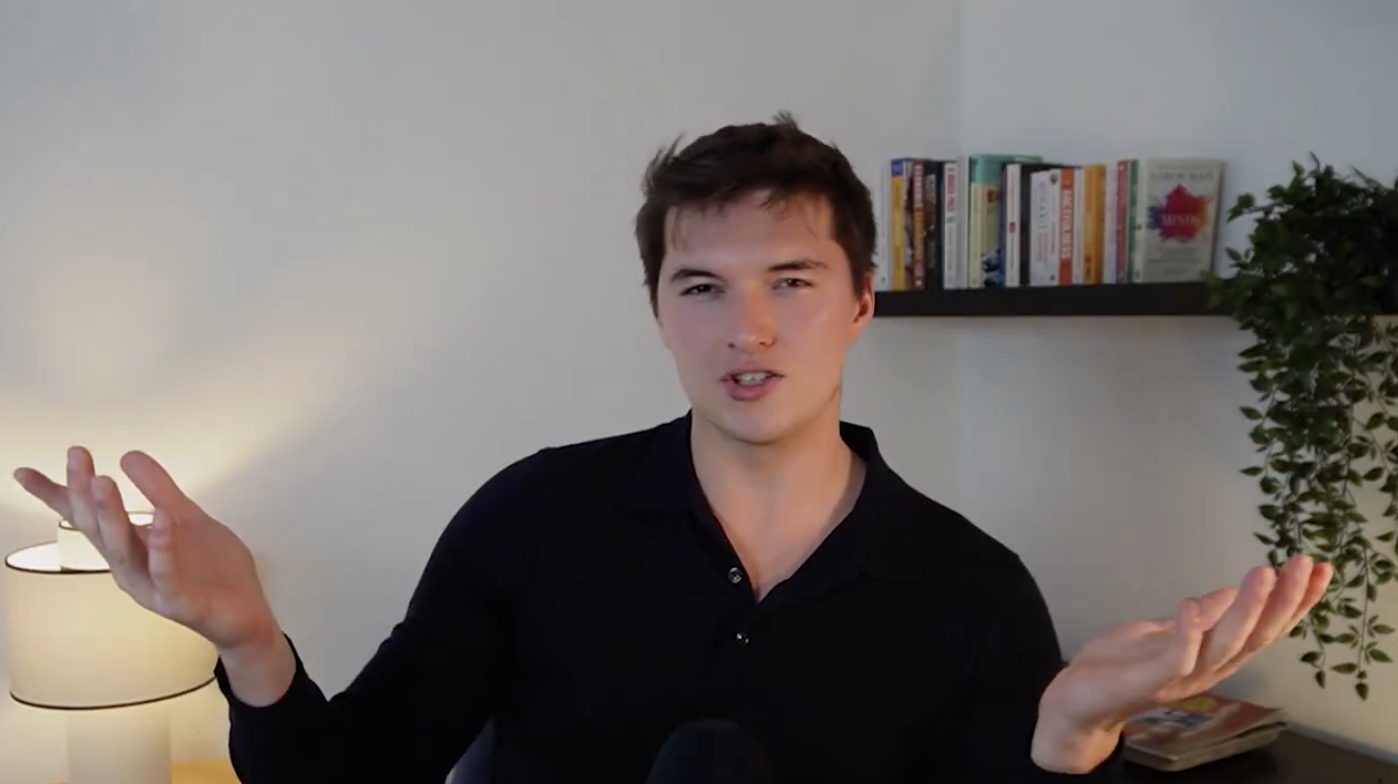
Joe and our work was mentioned again on The Rest is Politics, in their Question and Answer session in relation to #AddictionAwarenessWeek! on 26th November 2025
”Joe Woof, who's a trip plus member from London, asked: "With the sheer scale of addiction we see worldwide - a billion obese people, a billion smokers, 400 million alcoholics, according to international organisations, social media, etc. Why do we not see addiction as an infringement on individual freedom, when getting customers addicted is the intended outcome of these industries?”
Slightly disappointing they didn’t quite answer this directly, but they did go on to discuss this great campaign from The Forward Trust on the importance of being open and talking about addiction. But as of course we would add, acknowledging and understanding the economic drivers of addiction is also an important part of understanding the issues and we think also helps with countering blame and shame.
There have been some great contributions I saw from Tony Adams and Alastair Campbell, so here is the ‘conversation that changed everything’ for Joe. This was not only the moment that he quit vaping, but it was the start of the chain of events that lea to us starting our Addiction Economy initiative, with book out next year!
Here is the link to the episode where I'm the last segment. from 56.13
https://lnkd.in/ec8kJ7qN
Here's the link to watch my video on youtube
https://lnkd.in/e2CjT-kP
Here is the transcript.
So the conversation that changed everything for me was a seemingly ordinary call from my mom but it made something just click inside me and it helped me quit vaping and I haven't looked back since.
But just as important as the call was what was happening before that, which created the fertile ground that let this conversation have such impact.
So the irony of it all back then was while I was vaping I was creating a short documentary film for my masters dissertation on the economics and the youth perspective on the rise of youth vaping; and my friends were like, you know three four five six months in, they were like ‘you're not still vaping are you’ and I was like ‘yes but it's research, it's research, come on relax’.
But obviously there was this conflict because on the one hand I had all the information I could possibly want on why not to do it, yet I was still doing it. In the elevator of the library or in the changing room of the gym. At the back of my mind it was just like well ’you're an idiot. Why are you still doing this’. It felt like I was carrying a backpack full of weights around, and each time I bought one, on the way home from work it was just like "Oh god you're doing it again. You know why.” Even to the point that I was sitting in the library reading a story about a girl who died because of her lungs collapse from vaping, crying, with a vape in my hand.
But then a few days later I was in the park on a bench, you know the sun is shining lovely weather, but I wasn't thinking about any of that, I was thinking about am I going to crumble and have a vape?
And then my Mum bang me up randomly, and I remember having a conversation with her and deciding that, yeah, I’m going to vape. So I was bringing it to my mouth and she must have heard the pause in the conversation because she was like "You're not still vaping are you?" And I was like “No. No… no…..”
And something just clicked so I threw it in the bin and I haven't looked back since. But it was just like taking the backpack off and I was like, you know this is what it's meant to be like. It wasn't that ‘Oh I really want to but I shouldn't it was like - I don't want to do it it, doesn't appeal to me."
But this wasn't just a conversation that changed everything because of that, because the more I spoke to my Mum and told her about what it was like to be a young person, to witness this new addiction just appear, the more I realised that, well all these feelings of stupidity and weakness and blame just narrows the view within which we see addiction. And it blinds us from seeing the patterns that these feelings happen to thousands and thousands of people, young people and children. And the common denominator isn't that they're weak or stupid or snowflakes, the common denominator is the economics that allowed a colourful flavoured nicotine product that got popular on Tik Tok to be the defining characteristic of our high streets.
This was the starting point for our Addiction Economy research project that I'm now doing with my Mum, where we zoom out from the individual lens of addiction and draw attention to how the people that shape our physical and digital environments are ultimately responsible for the addiction that we see at a societal level. Hopefully we can use this lens to open up more conversations about addiction, without the blame and the stigma, by acknowledging the role that the economics has in driving these problems for all of us, and push for the kind of change that deep down we all secretly want - local areas that offer spaces for community, connection and happiness and to demand better than the current trajectory that is spiralling addiction mental health and isolation.
Because we can do better than this you know, and it starts with talking about it. Because if we don’t, all we're doing is sitting there in the front row in collective silence, watching addiction and mental health grind the country to a halt. We can do better right? No?